Empowering Veterans: A Strategic Guide for Employers
Employers can significantly empower veterans to join their workforce by implementing a multi-faceted strategy that encompasses targeted recruitment, a supportive and understanding company culture, and robust professional development programs. By recognizing the unique skills and experiences that veterans bring, companies can not only attract this valuable talent pool but also foster an environment where they can thrive.

MilitaryConnected.org is a nonprofit organization improving the military-connected community’s transition experience through employer education, data driven research, and access to a network of job opportunities with military-ready employers.
The Vegetus Foundation is dedicated to helping Americans improve their quality of life through education on healthy living and has published the Nutrition Health Review since 1979. Learn more at nutritionhealthreview.com


Cultivating a Veteran-Ready Culture
Creating an inclusive and welcoming environment is paramount to attracting and retaining veteran employees. This involves more than simply stating a commitment to hiring veterans; it requires tangible actions that demonstrate a genuine understanding and appreciation of their background.
Key Initiatives:
- Educate the Workforce: Conduct training for all employees, particularly hiring managers and leadership, on military culture, values, and the potential challenges veterans may face when transitioning to the civilian workforce. This fosters a more empathetic and supportive atmosphere.
- Establish a Veteran Employee Resource Group (ERG): Create a dedicated group for veteran employees and their allies. This provides a platform for networking, mentorship, peer support, and a collective voice to advocate for their specific needs and perspectives.
- Promote Understanding of Military Skills: Actively work to translate military occupations and experiences into relevant civilian job skills. Provide resources and training to both veterans and hiring managers to bridge any communication gaps.
- Foster a Mission-Oriented and Team-Based Environment: Many veterans are accustomed to a structured, team-oriented environment focused on accomplishing a clear mission. Emphasize teamwork, clear goals, and the company’s overall mission to create a familiar and motivating work culture.
- Recognize and Celebrate Military Service: Publicly acknowledge and celebrate military-affiliated holidays such as Veterans Day and Memorial Day. Highlight the contributions of veteran employees within the company to show appreciation for their service.
Strategic Recruitment and Hiring of Veterans
A proactive and targeted approach to recruitment is essential to connect with veteran talent. Traditional hiring methods may not always be effective in reaching this demographic. Best Practices:- Targeted Outreach: Actively participate in veteran-specific career fairs, both in-person and virtual. Partner with military transition assistance programs, veteran service organizations (VSOs) like the American Legion, Military Connected and VFW and utilize military-focused job boards.
- Military-Friendly Job Descriptions: Craft job descriptions that clearly articulate the desired skills and qualifications in language that resonates with veterans. Avoid corporate jargon and focus on transferable skills such as leadership, discipline, problem-solving, and teamwork.
- Skill-Based Hiring: Focus on a candidate’s demonstrated skills and experience rather than solely on their specific job titles or years of civilian work experience. Recognize the value of military training and certifications.
- Dedicated Veteran Hiring Programs: Consider establishing a specific program focused on recruiting and onboarding veterans. This could include specialized recruiters with military experience and a streamlined application process.
- Internship and Apprenticeship Programs: Offer programs like the Department of Defense’s SkillBridge, which allows service members to gain civilian work experience during their last 180 days of service. This provides a direct pipeline of trained and motivated candidates.
Comprehensive Support and Development for Veteran Employees
Empowerment extends beyond the hiring process. Providing ongoing support and clear pathways for career advancement is crucial for the long-term success and retention of veteran employees.Effective Programs and Support Systems:
- Structured Onboarding: Develop a comprehensive onboarding process that helps veterans acclimate to the corporate culture. This should include clear explanations of company structure, communication styles, and performance expectations.
- Mentorship Programs: Pair new veteran hires with experienced employees, ideally other veterans, who can provide guidance, support, and help them navigate the organizational landscape.
- Career Development and Training: Offer access to professional development opportunities, certifications,
- and training programs that build upon their existing skills and prepare them for leadership roles.
- Flexible Policies and Benefits: Consider offering benefits that are particularly valuable to veterans, such as flexible work schedules to accommodate VA appointments and military leave for those in the National Guard or Reserves.
- Mental Health and Wellness Resources: Provide access to confidential mental health resources and ensure a supportive environment where veterans feel comfortable seeking help if needed.
By implementing these strategies, employers can create a workplace where veterans feel valued, supported, and empowered to contribute their unique skills and leadership abilities, ultimately benefiting both the individual and the organization.
Interview Transcript from one of our community members.
Attendees: (Names/Company have been changed for privacy)
- Alex Chen: Job Candidate (U.S. Army Veteran, former Captain, Logistics Officer)
- Sarah Jenkins: HR Manager, Acme Innovations Inc.
- David Miller: Hiring Manager, Director of Operations, Acme Innovations Inc.
Position: Operations Manager
Date & Time: Monday, September 08, 2025, 12:20 PM
Location: Acme Innovations Inc. Headquarters
Part 1: Introductions & Opening
Sarah Jenkins (HR Manager): “Hi Alex, thank you for coming in today. I’m Sarah Jenkins, the HR Manager here at Acme Innovations. This is David Miller, our Director of Operations. We were both very impressed with your resume.”
Alex Chen (Candidate): “Sarah, David, it’s a pleasure to meet you both. Thank you for the opportunity. I’ve been following Acme’s work in supply chain optimization for a while now, and I’m very excited to be here.”
David Miller (Hiring Manager): “Welcome, Alex. We appreciate you taking the time. To start, could you walk us through your background and what led you to apply for the Operations Manager position with us?”

Alex Chen: “Certainly. I served for eight years as a Logistics Officer in the U.S. Army, finishing as a Captain. My primary role was planning and executing the movement of personnel and equipment globally. I was responsible for everything from supply chain management for a battalion of 600 soldiers to overseeing multi-million dollar equipment inventories. After transitioning, I sought a role where I could apply my experience in high-stakes operational planning and team leadership. When I saw the opening here, it felt like a perfect match for my skills in logistics, process improvement, and leading teams to accomplish complex missions.”
Part 2: Behavioral & Situational Questions
Sarah Jenkins: “That’s a strong background, Alex. Let’s dive into some specific examples. Can you tell us about a time you had to solve a complex logistical problem under a tight deadline?”
Alex Chen: “Absolutely. I can use the STAR method to frame this.”
- Situation: “While deployed in Afghanistan, my unit was tasked with relocating a forward operating base 50 miles away within 72 hours. This involved moving critical equipment, medical supplies, and 150 personnel through a high-threat area.”
- Task: “My objective was to create and execute a comprehensive logistics plan that ensured 100% accountability of assets and personnel, with zero loss, and have the new base operational within the 72-hour window.”
- Action: “First, I broke my team into three groups: packing and inventory, transportation, and advance setup. I developed a
- phased convoy movement plan, prioritizing sensitive and essential equipment. I coordinated with security teams for route clearance and air support for surveillance. We used a digital tracking system I had helped implement to monitor every pallet and vehicle in real-time, allowing us to react instantly to any delays.”
- Result: “Despite an unexpected route closure that forced a 4-hour detour, my team’s contingency planning allowed us to adapt quickly. We successfully completed the move in 68 hours—four hours ahead of schedule—with full accountability of all assets and personnel. The new base was mission-capable immediately.”
David Miller: “That’s impressive. Managing that level of detail under pressure is exactly what we need. Let’s talk about leadership. Describe your approach to managing a team with diverse skill sets and personalities.”
Alex Chen: “My leadership philosophy is centered on mission command and individual development. In the military, you lead soldiers from all walks of life. I learned to identify each individual’s strengths and place them in roles where they could excel. I believe in clearly communicating the ‘what’ and the ‘why’—the mission objective and its importance—and then empowering my team to determine the ‘how.’ I hold regular check-ins to provide guidance and resources, but I trust my people to be experts in their jobs. This fosters initiative and ownership. For example, I had a specialist who was quiet but incredibly detail-oriented. I put her in charge of our sensitive items inventory, a critical task, and she completely streamlined the process, reducing our audit discrepancies by 90%.”
Part 3: Skills Translation & Experience
David Miller: “Your resume mentions ‘risk management’ and ‘process improvement.’ In a corporate context, what does that look like to you?”
Alex Chen: “For me, risk management is proactive, not reactive. In the military, we use a formal five-step process: identify hazards, assess hazards, develop controls, implement controls, and supervise and evaluate. I applied this to everything, from convoy safety to managing our budget. In a corporate setting, this translates directly to analyzing operational weak points—like a single-source supplier—and developing mitigation strategies, such as qualifying a secondary vendor or increasing safety stock. For process improvement, I’m a firm believer in the ‘after-action review,’ or AAR. After every major project, my team and I would sit down and ask: What was supposed to happen? What actually happened? Why was there a difference? What can we do better next time? It’s a simple but powerful tool for continuous improvement that I would implement here.”
Sarah Jenkins: “Many veterans find the transition to a corporate culture challenging. What have you done to prepare for this shift?”
Alex Chen: “I’ve been very intentional about that. I completed a project management certification (PMP) to learn the industry-standard language and methodologies. I’ve also conducted informational interviews with veterans who are now successful in the corporate world, learning from their experiences. I understand that the communication style is different—less direct, more collaborative—and that success is measured by metrics like profitability and efficiency, not just mission accomplishment. I see it as learning a new culture, and I’m prepared to listen, adapt, and integrate.”
Part 4: Candidate Questions & Closing
David Miller: “This has been very insightful, Alex. Do you have any questions for us?”
Alex Chen: “Yes, thank you. I have two, if that’s okay.”
- “Can you describe the biggest operational challenge this team is facing right now, and how this role would be expected to contribute to the solution in the first 90 days?”
- “Acme Innovations has a veteran employee resource group. Could you tell me a bit more about its role in the company and how it supports employees?”
Sarah Jenkins: “Those are great questions. David can take the first one.”
David Miller: “Certainly. Our biggest challenge is reducing our ‘dock-to-stock’ time in the warehouse. We’ve had some bottlenecks with our new inventory system. In the first 90 days, we’d expect the Operations Manager to conduct a full process analysis, work with the warehouse floor team to identify inefficiencies, and present a data-driven plan for improvement.”
Sarah Jenkins: “And regarding our Vets ERG, it’s very active! They provide mentorship for new veteran hires, organize community service events with local veterans’ organizations, and offer valuable feedback to leadership on how we can better support our military-affiliated employees. It’s a fantastic community and resource.”
Alex Chen: “Thank you both. That sounds like a challenging and supportive environment, which is exactly what I’m looking for. I am confident that my experience in leading teams and streamlining complex processes can directly address the challenges you mentioned.”
Sarah Jenkins: “Thank you again for your time, Alex. We have a few more candidates to interview this week. We will be in touch with an update by next Tuesday. It was a pleasure to meet you.”
Alex Chen: “The pleasure was all mine. I look forward to hearing from you. Have a great afternoon.”
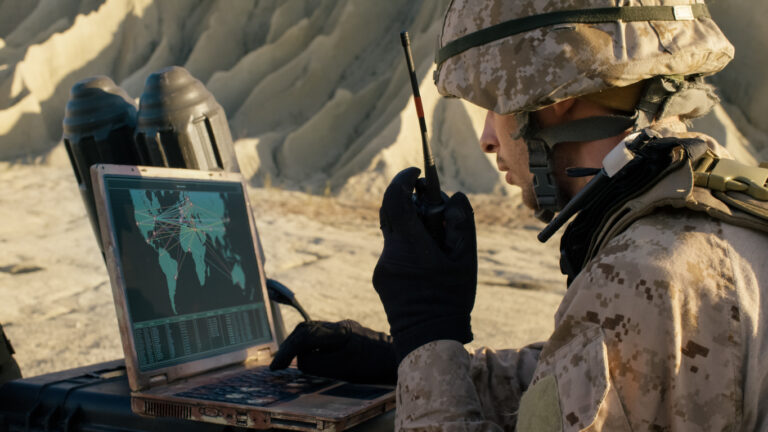

5 essential steps for a military veteran to prepare for a job interview:
1. Translate Your Military Experience
Your military career is filled with valuable experience, but it needs to be translated into terms that civilian hiring managers can understand. Avoid using military jargon and acronyms. Instead, focus on the skills and responsibilities that are relevant to the job you’re applying for.
- Before: “As a Platoon Sergeant, I was responsible for the readiness of 40 soldiers and their equipment, valued at over $5 million.”
- After: “I led and managed a team of 40 individuals, overseeing their professional development, performance evaluations, and daily operations. I was also responsible for the maintenance and accountability of over $5 million in equipment and assets.”
A great tool for this is the STAR method (Situation, Task, Action, Result). Frame your experiences as stories with a clear beginning, middle, and end that showcase your accomplishments.
2. Research the Company and Role
Thoroughly research the company to understand its mission, values, culture, and recent achievements. This will not only help you determine if it’s a good fit for you but also enable you to tailor your answers to their specific needs.
Company Website: Pay close attention to the “About Us,” “Mission,” and “Careers” pages.
- LinkedIn: Look up the company profile and the profiles of the people who will be interviewing you. This can provide insight into their professional backgrounds and the company culture.
- News Articles: Search for recent news or press releases about the company. This can give you talking points and show that you’ve done your homework.
Understand the job description inside and out. Be prepared to explain how your skills and experience align with the specific requirements of the role.

3. Prepare Your Stories and Answers
Anticipate common interview questions and prepare thoughtful responses. As a veteran, you have a unique set of experiences
that can be powerful assets if articulated correctly.
- Common Questions: “Tell me about yourself,” “What are your strengths and weaknesses?,” “Why do you want to work here?”
- Veteran-Specific Questions: “How has your military experience prepared you for this role?,” “Describe your leadership style,” “How do you handle high-pressure situations?”
Practice your answers out loud. This will help you sound more confident and natural during the actual interview.
4. Develop Insightful Questions
At the end of the interview, you’ll almost always be asked, “Do you have any questions for us?” This is a crucial opportunity to demonstrate your interest and intelligence. Prepare a few thoughtful questions that go beyond what you could find on their website.
- “Can you describe the team I would be working with?”
- “What are the biggest challenges someone in this role would face in the first 90 days?”
- “How does this position contribute to the overall goals of the company?”
- “Does the company have a veteran employee resource group or other support systems for veterans?”
5. Plan Your Attire and Logistics
First impressions matter. Plan to dress in professional business attire that is appropriate for the company’s culture. If you’re unsure, it’s always better to be slightly overdressed.
- In-Person Interview: Plan your route, allow for extra travel time, and bring multiple copies of your resume, a notepad, and a pen.
- Virtual Interview: Test your technology (internet connection, camera, microphone) beforehand. Choose a quiet, well-lit location with a professional background.